
Adwa: The Hidden Cost to Tigrayan Identity
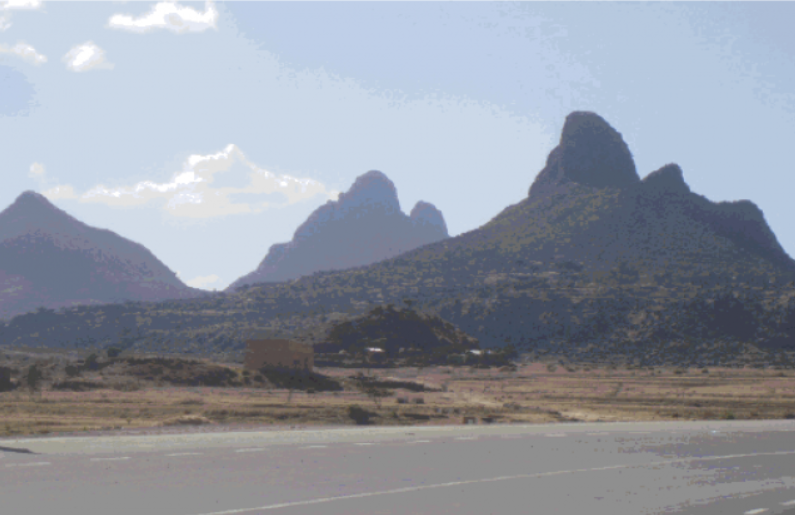
The Battle of Adwa in 1896 is immortalized in history as Ethiopia’s defiant stand against Italian colonialism, a moment of African pride and resilience. Widely celebrated as a symbol of Black resistance, it is often presented as a unifying triumph for Ethiopia and a beacon for Pan-Africanism. That anti-colonial significance should not be denied. The defeat of a European colonial army on African soil remains historically important.
Yet beneath this polished national narrative lies a troubling reality for Tigrayans, who bore much of the burden of the battle and its aftermath. The official memory of Adwa has often honored Ethiopia while minimizing Tigray’s cost. Far from empowering Tigray politically, Adwa became a turning point through which Tigrayan sacrifice was absorbed into an imperial story that later weakened Tigrayan agency. This opinion piece offers a critical lens on that hidden cost: not to erase Adwa’s anti-colonial meaning, but to ask why Tigray’s suffering, sacrifice, and fragmentation have so often been buried beneath the language of shared Ethiopian glory.
The Deception of Adwa: A National Myth and a Tigrayan Cost
Tigrayan warriors were instrumental in securing the victory at Adwa. Their bravery and sacrifice are undeniable. Their blood soaked the battlefield, yet the spoils of this triumph were claimed by Menelik II’s Ethiopian empire and folded into a national story centered on imperial unity. Over time, a Tigrayan contribution became a symbol of centralized state power, while Tigray’s own political wounds were pushed to the margins.
The narrative that emerged, one of Ethiopian unity under Menelik’s banner, became a painful inheritance for Tigray. It encouraged generations of Tigrayans to celebrate a victory whose official memory rarely acknowledged the region’s devastation or later political subordination. This reframing stripped Tigray of much of its agency, reducing its role to loyal sacrifice within an empire-building project that prioritized central authority over Tigrayan autonomy.
As I argued in an earlier piece published in Aiga, The Quest for Unifying Tigrayan Leadership, Ethiopian rulers have historically sought to suppress Tigray’s influence by eroding its political and economic base. Adwa was not outside that pattern. It became an opportunity for the Ethiopian state to consolidate power while Tigray carried a heavy portion of the cost.
The legacy of Adwa has been polished into a national myth, one that generations of Tigrayans have been taught to revere. This pride, however, rests on an incomplete memory. Adwa did not usher in prosperity or recognition for Tigray. Instead, it entrenched a narrative that benefited an imperial state while overshadowing Tigray’s independent traditions of resistance. Long before Adwa, Tigrayans repelled Ottoman incursions in the 16th century, held off Egyptian expansion in the 19th century, and resisted Mahdist Sudanese invasions. Adwa was not the beginning of Tigrayan resilience. It was one chapter in a much longer history.
The Brutal Aftermath: Economic Devastation and Social Wounds
Menelik’s forces did not merely pass through Tigray on their way to Adwa. Historical accounts and Tigrayan memory describe severe economic destruction: livestock confiscated, food stores depleted, forests damaged, and communities left unable to sustain themselves. Whether framed as military requisition, imperial punishment, or wartime plunder, the effect on Tigray was devastating. The region emerged weakened, impoverished, and more dependent on a state that did not treat it as an equal partner.
The social wounds were also deep. Tigrayan memory has long carried accounts of sexual violence and coercion associated with imperial military movement through the region. Such violence should be discussed with seriousness and care, not as a crude claim about “bloodlines,” but as part of the broader pattern by which war damages communities, violates women, fractures families, and leaves long social consequences. The point is not biological purity. The point is dignity, historical truth, and the need to acknowledge forms of violence that official national memory has preferred to ignore.
A troubling modern echo came from Prime Minister Abiy Ahmed, who reportedly stated in parliament that “one in ten soldiers of Menelik had a child from a Tigrayan woman.” Far from a neutral historical observation, such a remark was heard by many Tigrayans as a jab at Tigrayan identity and as a reminder of how violence against Tigrayan women can be turned into political language. Whether intended as historical reference, provocation, or careless rhetoric, the statement exposed a disturbing continuity: the suffering of Tigrayan women can be minimized, mocked, or instrumentalized when it serves a broader political narrative.
A Personal Reckoning: Escaping the Adwa Myth
I know this deception firsthand. In the early 1990s, while studying in the Netherlands, I was among the first Ethiopians to document Adwa’s history online. As a student with access to the nascent internet, I compiled historical accounts and published them on a university-hosted website. Feedback poured in. People were eager to learn about this great African victory. I was proud, believing I was sharing a moment of resistance that belonged to all of us, especially Tigrayans.
At the time, I saw Adwa as a symbol of strength, something to celebrate. I did not yet see how the official memory of Adwa had been used to manipulate generations, binding Tigrayans emotionally to a state that repeatedly weakened their political agency. It was after 2018, as Abiy Ahmed’s regime rose and Tigray’s role in Ethiopian history was again distorted, that I began a deeper reckoning. What I once celebrated as a defining African victory, I began to understand as a victory whose official memory carried a hidden cost for Tigrayan identity.
This personal journey mirrors a broader reckoning that Tigrayan scholars, thinkers, and youth must undertake. To question the official memory of Adwa is not to deny the courage of those who fought there. It is to ask why the courage of Tigrayans was later used to strengthen a state that rarely acknowledged Tigray’s suffering as its own.
As events unfolded after 2018, my concerns deepened. Abiy’s consolidation of power was accompanied by efforts to rewrite Ethiopian history, marginalize Tigray, and delegitimize its role in shaping the country. Witnessing this erasure forced me to reexamine everything. I saw how the battle of Adwa had been weaponized, not to honor Tigrayan resilience, but to chain Tigray emotionally to a state that never fully recognized its sacrifices.
The Modern Manipulation: Adwa as a Political Tool
The manipulation of Adwa persists today. The Adwa Victory Memorial Museum, unveiled by Abiy Ahmed’s government in Addis Ababa, reflects how this historical memory can be shaped to serve contemporary political ends. Rather than offering a full reckoning with Tigray’s sacrifice and suffering, the museum presents Adwa largely through a pan-Ethiopian and imperial narrative that appeals to pan-African admiration while smoothing over the internal violence and regional costs that followed the battle.
The danger is not that Adwa is remembered. The danger is that it is remembered selectively. Menelik II is cast as the heroic architect of a united African stand, while his role in imperial expansion, his dealings with colonial powers, and his army’s impact on Tigray receive far less attention. The museum exalts Adwa’s triumph while leaving insufficient space for the economic devastation, violated communities, and fractured political future that Tigray experienced in its aftermath.
This selective memory lays bare a painful reality: Adwa did not liberate Tigray politically. The battle’s aftermath contributed to Tigray’s fragmentation across two political spaces, with Eritrea under Italian colonial rule and Tigray proper within Ethiopia. This division weakened the collective strength of related communities across the Mereb and exposed Tigray to the empire’s divide-and-rule tactics.
It is important to be clear: this is not to romanticize Italian colonial rule. Colonialism would have brought its own violence, exploitation, and humiliation. The point is not that colonial rule would have been preferable. The point is that Adwa, while rightly remembered as an anti-colonial victory, also became part of a political order that left Tigray divided, weakened, and subordinated. That tragic irony must be named honestly.
For Abiy Ahmed, Adwa has become a useful political symbol in his attempt to redefine Ethiopia’s identity under the banner of “Ethiopianism.” His strategy appears to rest on several unstable pillars: weakening Tigray and dismantling TPLF as a rival political force; using Ethiopianist memory to appeal to Amhara historical narratives; and presenting the empire as a political space Oromos can now inherit or reshape. Yet this project has produced contradictions of its own, including escalating conflict with Amhara forces and deepening instability across the country.
In this context, the Adwa Museum is less a complete tribute to history than a selective performance of national memory. For Tigrayans, it reaffirms a bitter truth: Adwa, as officially narrated, has often served as a tool of political absorption rather than a source of Tigrayan empowerment.
Divide and Rule: A Persistent Strategy
The Ethiopian imperial center, shaped largely by Amhara elite narratives and institutions, often regarded Tigray’s strength as a threat to central authority. Before Adwa, Tigrayan rulers such as Ras Alula stood as formidable obstacles to centralization. After the battle, Menelik II turned the outcome into a tool of imperial consolidation. By accepting Eritrea, including northern Tigrinya-speaking lands, under Italian rule while retaining Tigray proper within Ethiopia, he left related communities divided across colonial and imperial borders.
Within Ethiopia, imperial rulers stoked rivalries among Tigrayan nobles, redistributed lands to loyalists, and sidelined the region from imperial power, cementing its subordination. The social scars from military occupation, violence against civilians, and the manipulation of local rivalries became part of a longer pattern through which Tigray was kept fragmented and politically constrained.
This divide-and-rule logic resurfaced with devastating force in the recent war on Tigray. Abiy Ahmed’s government and its allies devastated Tigray’s economy through blockade and destruction, sowed distrust among leaders through propaganda, and unleashed violence that damaged the region’s social fabric. Ethiopian rulers, from Menelik to Abiy, have repeatedly treated Tigrayan unity as a threat. Each February, when Tigrayans join Ethiopia in commemorating Adwa without confronting this history, the ritual carries a painful paradox. Far from fostering Tigray’s resurgence, the official memory of Adwa can deepen the wound when it is celebrated without truth.
Conclusion: The Survival of Tigray Through Truth
It is time to face a painful truth: Adwa was an anti-colonial triumph, but its official Ethiopian memory has not been a triumph for Tigray. While Menelik and his empire emerged fortified, Tigray was left divided, weakened, and politically dispossessed. The narrative instilled in our children, that Adwa was simply a shared Ethiopian glory, veils a deeper reality of exploitation, sacrifice, and loss.
To call Adwa’s aftermath a crime against Tigray is not to deny the valor of those who fought there. It is to insist that valor should not be used to erase the suffering that followed. The battle and its aftermath dealt wounds far beyond the battlefield: economic devastation, violence against women, fractured communities, and a national memory that swallowed Tigray’s sacrifice while ignoring Tigray’s pain.
Tigray’s future rests on unearthing the truths buried beneath this myth. By recasting this history with honesty, honoring the courage of Tigrayan fighters while laying bare the betrayal and dispossession that followed, Tigrayans can forge a stronger and more truthful identity. The choice is not between celebrating Adwa and rejecting it. The choice is between inherited myth and historical maturity. Tigray can honor courage without accepting erasure.