What the TDF Commanders’ Declaration Means for Tigray
A Declaration Under Pressure
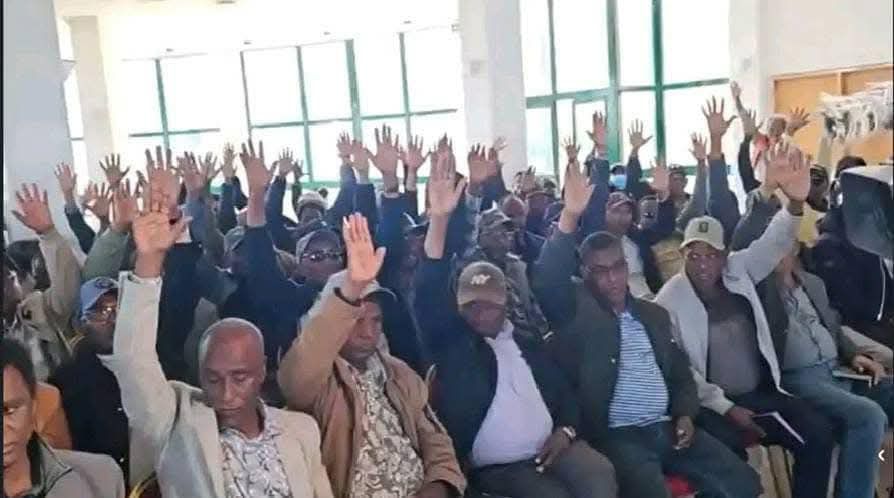
At this critical juncture, the carefully deliberated declaration by TDF commanders signals a serious attempt to break the political deadlock within Tigray’s leadership. Issued amid escalating tensions between Getachew Reda’s splinter group and the congress-recognized TPLF, the statement reflects the commanders’ dissatisfaction with the Tigray Interim Administration (TIRA) and its handling of critical post-war issues.
The importance of the declaration lies not in military authority replacing civilian politics, but in the survival context from which it emerged. Tigray remains under unresolved pressure: Pretoria has not been meaningfully implemented, displaced people remain away from their homes, occupied territories remain unrestored, and institutional ambiguity continues to weaken Tigray’s bargaining position. In such a setting, a security institution formed under existential threat cannot be treated as a detached observer of political paralysis.
Why the Declaration Matters
The resolution outlined in the 13-point declaration aligns closely with the proposals of the TPLF’s 14th Congress, including the reorganization of TIRA. The commanders accused TIRA, under President Getachew Reda, of failing to prioritize core issues such as Pretoria implementation, the return of IDPs, and the restoration of Tigray’s territories.
This call to reorganize TIRA should be understood as part of a broader demand for accountable and functional governance. Its value is not that the military alone can decide Tigray’s political future. Its value is that it forces the political class to confront a reality that many ordinary Tigrayans already feel: institutions that cannot restore displaced citizens, defend territorial rights, or communicate a credible roadmap cannot carry Tigray through this phase.
Civilian Authority and Survival Logic
Those opposing the TDF commanders’ position should reflect seriously on the consequences of continued paralysis. At the same time, concerns about military involvement in political questions should not be dismissed casually. Tigray’s long-term future requires accountable civilian institutions, legitimate political authority, and public trust. No military structure should become a permanent substitute for civilian political order.
The question is how Tigray preserves civilian authority while avoiding strategic collapse. While I recognize the deficiencies and accountability shortcomings within TPLF and its leadership, the current crisis requires choosing the path that best preserves Tigray’s coherence, bargaining position, and ability to act. My support for TPLF in this context is not rooted in uncritical admiration. It is rooted in practical judgment: TPLF remains one of the central institutional carriers of Tigray’s political continuity, and it must be pushed toward reform, accountability, and service to the people’s demands.
Critics aligned with President Getachew Reda’s faction, social media activists, and other concerned voices have the right to express disagreement. But disagreement should not deepen institutional paralysis or convert political frustration into a vacuum that external actors can exploit. After serious dialogue, Tigray needs decisions that can be implemented. Endless contestation without functional authority risks leaving Tigray exposed.
The Task Before TIRA
Moving forward, TIRA must be reorganized with clearly defined tasks, responsibilities, and timelines. This reorganization should include transparent communication with all stakeholders, including mediators, civic actors, political organizations, and the public.
The immediate priorities are clear: implementation of the Pretoria Agreement, restoration of Tigray’s constitutional territories, return and protection of IDPs, humanitarian recovery, institutional clarity, and preparation for a legitimate political transition. Tigray can navigate the current crisis only through decisive collective action anchored in civilian authority, security discipline, and public accountability.
Not a Call for Confrontation
For those who interpret this declaration as an outright invitation to conflict with Abiy Ahmed, let me be clear: this is not a call for confrontation. Tigray’s leaders and people have waited too long for a peaceful resolution to these challenges. But peace cannot mean paralysis, and restraint cannot mean surrendering Tigray’s institutional capacity to act.
We are dealing with a calculated adversary, and genuine peace requires honest and forward engagement. Tigray must be disciplined, clear-eyed, and prepared. The purpose of political reorganization is not to seek war, but to ensure that Tigray is not left voiceless, leaderless, or defenseless while its core demands remain unresolved. Justice, sovereignty, and dignity require institutions capable of carrying them.
Related Essays
All essays →TDF Pragmatism, Civilian Authority, and Tigray’s Survival Logic
Some academic voices and political factions aligned with Getachew Reda have criticized the Tigray Defense Forces following the commanders' declaration recognizing one TPLF after the 14th congress. Their argument is that the TDF is militarizing politics and overstepping its role.
Trapped Between Principle and Power: TDF’s Command at a Crossroads
Tigrayans have long been admired for their principled stance, resilience, and determination in the face of adversity. These traits have been central to the region's survival and its people's identity.
The Political Crisis Within TPLF: Diagnosing Organizational Weakness and the Need for Renewal
This analysis represents a personal perspective from a technical professional born and raised in Addis Ababa, who later began his career in Tigray in the mid-1990s and spent significant time living and working there.